
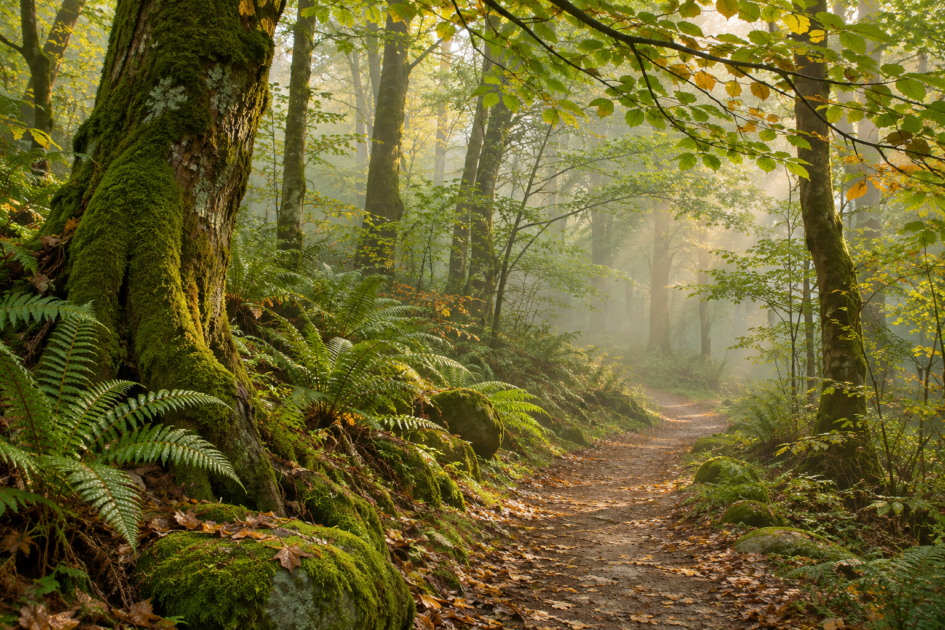
Looking down changes the scale of a woodland walk. Instead of distant trunks and the broad canopy, the scene becomes a collection of curled leaves, scattered twigs and small changes in texture. A few square steps can provide an entire notebook page.
Begin with colour. Record the shades you notice before assigning names to objects. Brown might become copper, grey, ochre or nearly black when described more carefully. Dampness and shade can make the same patch look different between visits.
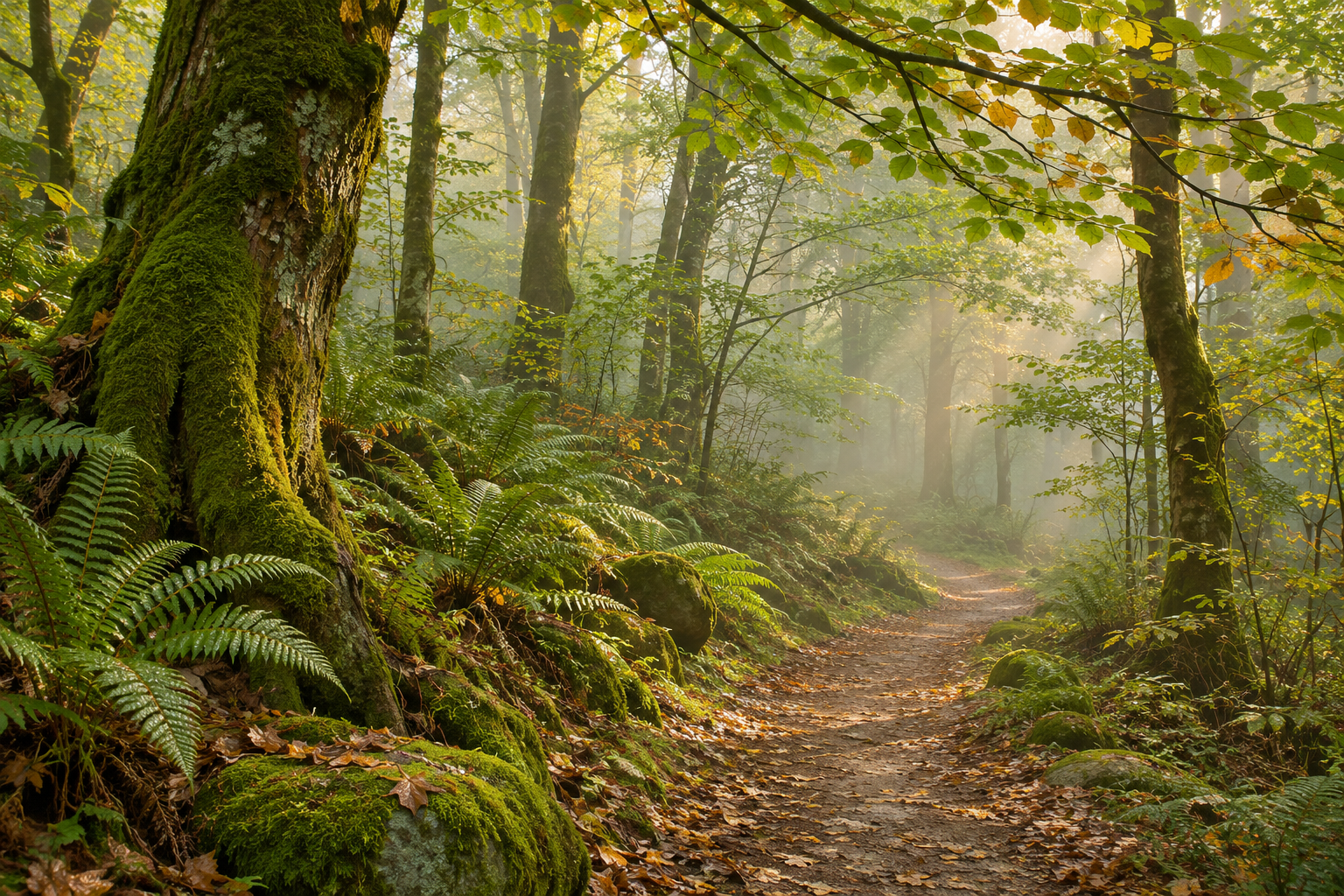
Next consider arrangement. Draw a rough outline of a branch beside a leaf, or describe how a path edge meets the surrounding ground. Leave everything where it is and use sketches or photographs as your souvenirs.
The exercise works best without a target list. A satisfying entry may describe one overlooked corner rather than an unusual discovery. Close attention gives ordinary woodland details enough space to become memorable.