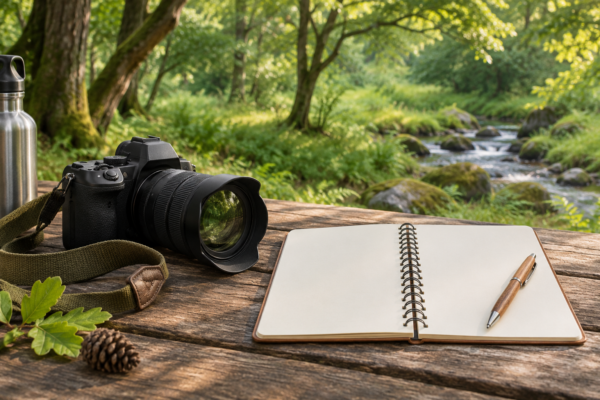
A photograph remembers some parts of an outdoor moment remarkably well while leaving others outside the frame. Field notes can supply that missing context: the reason you stopped, the sound nearby or the impression of arriving at a view.
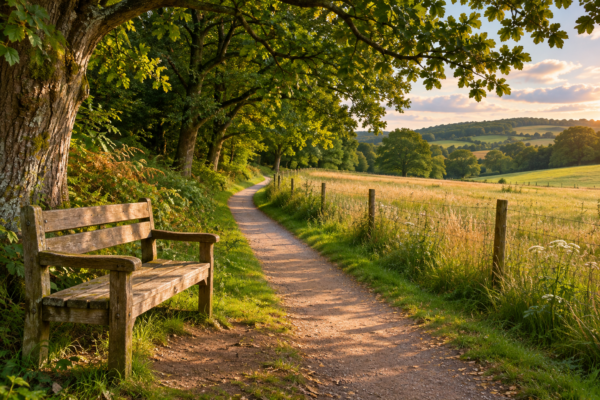
A personal walking map can record impressions as well as direction. Start with a route you already know and sketch its main turns from memory. Leave space for the places where you tend to slow down or look around.
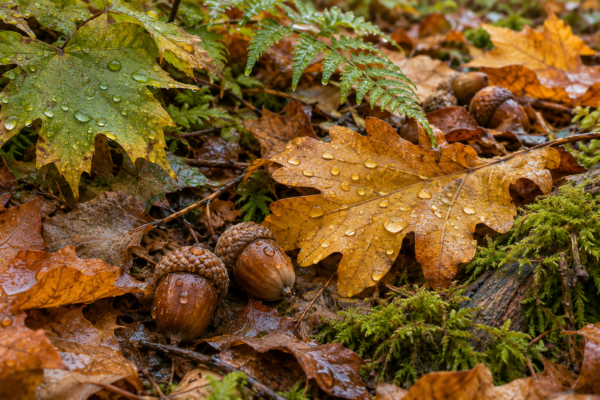
Seasonal notes often focus on obvious turning points, but the intervals deserve attention too. A stretch of apparently similar days can still offer small differences in light, texture and the feeling of an ordinary walk.
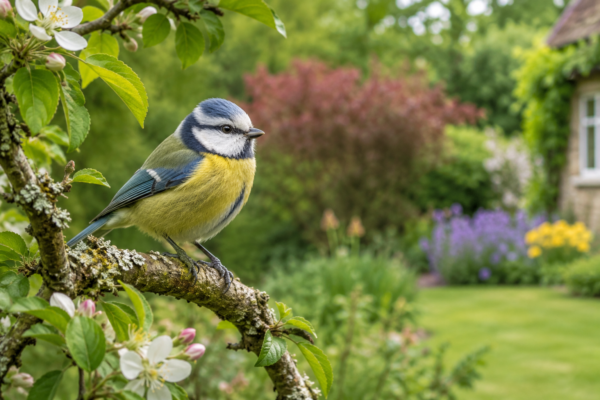
The most approachable bird notebook may be the one used close to home. Repeated glimpses from a familiar walk or window can be easier to compare than a single ambitious outing. Begin with the encounters your usual routine already provides.
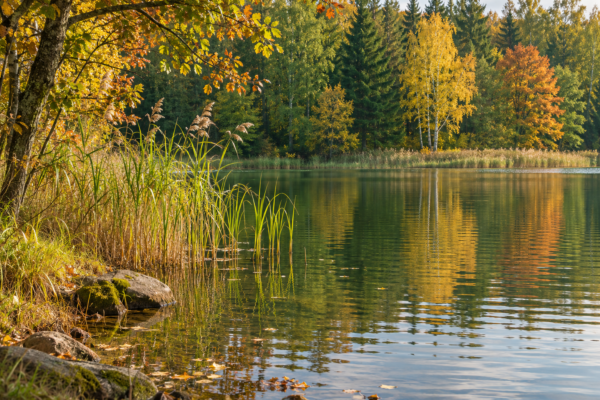
Reflections offer a useful subject when a waterside walk feels visually quiet. Trees, sky and nearby structures can appear as broken shapes rather than recognisable objects. Looking at these shapes encourages a slower kind of observation.
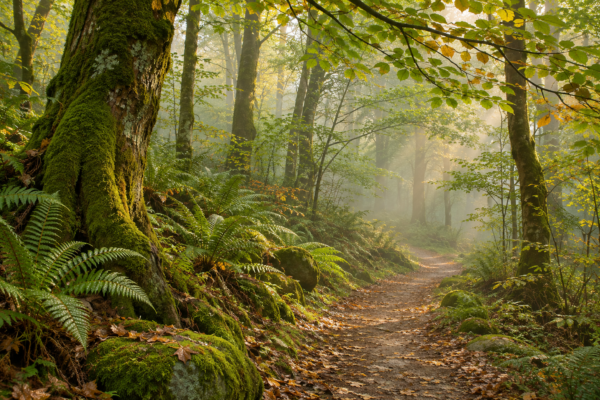
Looking down changes the scale of a woodland walk. Instead of distant trunks and the broad canopy, the scene becomes a collection of curled leaves, scattered twigs and small changes in texture. A few square steps can provide an entire notebook page.
Limiting a photo walk to three pictures of one view can make the process more deliberate. Begin by watching the scene before lifting the camera. Decide which part of the arrangement first caught your attention.
A walking journal becomes easier to keep when each outing begins with a manageable question. What changes after the bend? Which part of the route feels most open? Where does the sound of traffic fade from attention?
Autumn lends itself to a journal built around colour rather than a list of sights. A familiar path may hold enough variation for several pages. The challenge is to describe those shades precisely while leaving the landscape undisturbed.
A birdwatching entry does not have to start with a species name. It can begin with movement at the edge of a path, a brief call or a silhouette on a branch. Writing down the encounter first leaves identification as a separate question.
A lakeside journal can begin with a single view. Find an established place to pause and describe the water, the opposite shore and the nearest foreground. Keeping those three layers in mind makes a broad landscape easier to put into words.
A familiar path can become an unexpectedly rich subject for a nature journal. The route stays much the same, while its colours, sounds and small details keep changing. Choose one ordinary stretch of woodland rather than trying to describe an entire forest.
© 2026 Belursus Nature Journal — Powered by WordPress
Theme by Anders Noren — Up ↑